• Image for Unforgettable sacrifice

    Unforgettable sacrifice

    "'Unforgettable Sacrifice' offers a groundbreaking exploration into the heart of African American memory of the Civil War, challenging conventional narratives and revealing a rich history preserved through oral traditions and communal efforts. Through extensive archival research and stories shared on the porches of African American families, Hilary Green provides a detailed examination of how diverse Black communities across the United States have actively preserved and contested the memory of the Civil War, from the nineteenth century to the present"-- Provided by publisher.

  • Image for Ada Twist, scientist

    Ada Twist, scientist

    Ada Twist is a very curious girl who shows perseverance by asking questions and performing experiments to find things out and understand the world.

  • Image for Girl, woman, other

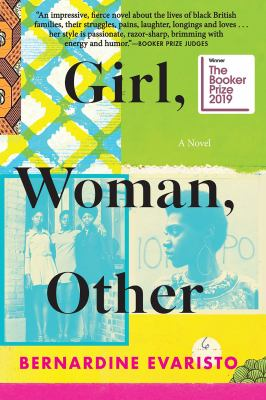
    Girl, woman, other

    "Girl, Woman, Other is a celebration of the diversity of Black British experience. Moving, hopeful, and inventive, this extraordinary novel is a vivid portrait of the state of contemporary Britain and the legacy of Britain's colonial history in Africa and the Caribbean. The twelve central characters of this multi-voiced novel lead vastly different lives: Amma is a newly acclaimed playwright whose work often explores her black lesbian identity; her old friend Shirley is a teacher, jaded after decades of work in London's funding-deprived schools; Carole, one of Shirley's former students, works hard to earn a degree from Oxford and becomes an investment banker; Carole's mother Bummi works as a cleaner and worries about her daughter's lack of rootedness despite her obvious achievements. From a nonbinary social media influencer to a 93-year-old woman living on a farm in Northern England, these unforgettable characters also intersect in shared aspects of their identities, from age to race to sexuality to class. Sparklingly witty and filled with emotion, centering voices we often see othered, and written in an innovative and fast-moving form that borrows from poetry, Girl, Woman, Other is a polyphonic and richly textured social novel that reminds us of everything that connects us to our neighbors, even in times when we are encouraged to be split apart"-- Provided by publisher.

  • Image for Black women taught us

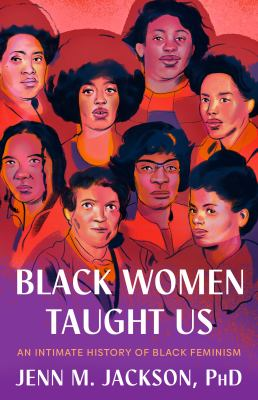
    Black women taught us

    "Jenn M. Jackson has been known to bring deep historical acuity to some of the most controversial topics in America today. Now, in their first book, Jackson applies their critical analysis to the questions that have long energized their work: Why has Black women's freedom fighting been so overlooked throughout history, and what has our society lost in the meantime? A love letter to those who have been minimized and forgotten, this collection repositions Black women's intellectual and political work at the center of today's liberation movements. Across thirteen original essays that explore the legacy and work of Black women writers and leaders--from Harriet Jacobs and Ida B. Wells to the Combahee River Collective and Audre Lorde--Jackson sets the record straight about Black women's longtime movement organizing, theorizing, and coalition building in the name of racial, gender, and sexual justice in the United States and abroad. These essays show, in both critical and deeply personal terms, how Black women have been at the center of modern liberation movements, despite the erasure and misrecognition of their efforts. Jackson illustrates how Black women have frequently done the work of liberation at great risk to their lives and livelihoods"-- Provided by publisher.

  • Image for Roots

    Roots

    This poignant and powerful narrative tells the dramatic story of Kunta Kinte, snatched from freedom in Africa and brought by ship to America and slavery, and his descendants. Drawing on the oral traditions handed down in his family for generations, the author traces his origins back to the seventeen-year-old Kunta Kinte, who was abducted from his home in Gambia and transported as a slave to colonial America. In this account Haley provides an imaginative rendering of the lives of seven generations of black men and women.

  • Image for Tristan Strong keeps punching

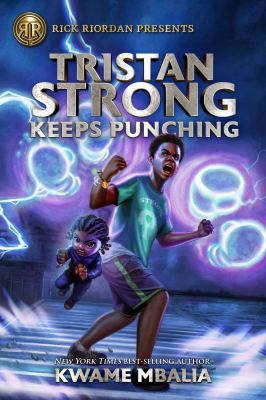
    Tristan Strong keeps punching

    The Strong family is having a reunion in New Orleans, and twelve-year-old Tristan is supposed to be keeping an eye on his younger cousin Terrance when several things happen at once: he sees his archenemy, King Cotton, and a mysterious girl grabs his magiccellphone--her name is Seraphine, and she seems to know everything about Tristan and the god Anansi (currently inhabiting the cellphone), and she has a mission for Tristan, one that is going lead to a final confrontation with haint King Cotton.

  • Image for Without fear

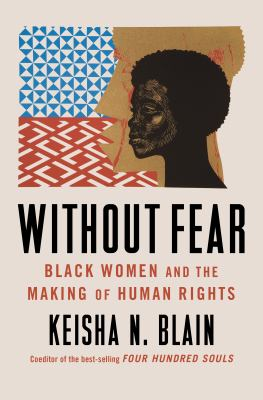
    Without fear

    "Even before they were recognized as citizens of the United States, Black women understood that the fights for civil and human rights were inseparable. Over the course of two hundred years, they were at the forefront of national and international movements for social change, weaving connections between their own and others' freedom struggles around the world. Without Fear tells how, during American history, Black women made humans rights theirs: from worldwide travel and public advocacy in the global Black press to their work for the United Nations, they courageously and effectively moved human rights beyond an esoteric concept to an active, organizing principle. Acclaimed historian Keisha N. Blain tells the story of these women--from the well-known, like Ida B. Wells, Madam C. J. Walker, and Lena Horne, to those who are still less known, including Pearl Sherrod, Aretha McKinley, and Marguerite Cartwright... Without Fear is an account of their aspirations, strategies, and struggles to pioneer a human rights approach to combating systems of injustice."-- Provided by publisher.

  • Image for This motherless land

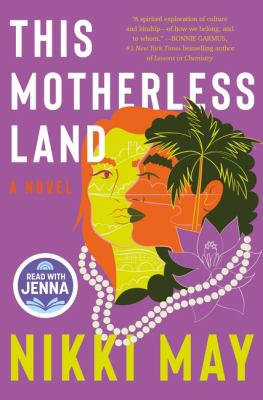
    This motherless land

    "From the acclaimed author of Wahala, a "vibrant" (Charmaine Wilkerson) decolonial retelling of Mansfield Park, exploring identity, culture, race, and love. Quiet Funke is happy in Nigeria. She loves her art teacher mother, her professor father, and even her annoying little brother (most of the time). But when tragedy strikes, she's sent to England, a place she knows only from her mother's stories. To her dismay, she finds the much-lauded estate dilapidated, the food tasteless, the weather grey. Worse still, her mother's family are cold and distant. With one exception: her cousin Liv. Free-spirited Liv has always wanted to break free of her joyless family. She becomes fiercely protective of her little cousin, and her warmth and kindness give Funke a place to heal. The two girls grow into adulthood the closest of friends. But the choices their mothers made haunt Funke and Liv and when a second tragedy occurs their friendship is torn apart. Against the long shadow of their shared family history, each woman will struggle to chart a path forward, separated by country, misunderstanding, and ambition. Moving between Somerset and Lagos over the course of two decades, This Motherless Land is a sweeping examination of identity, culture, race, and love that asks how we find belonging and whether a family's generational wrongs can be righted."-- Provided by publisher.
  • Image for Black star

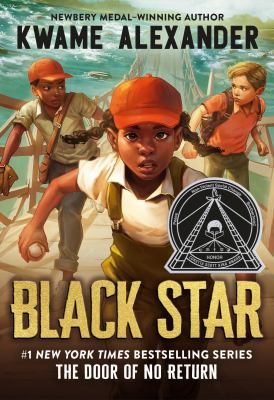
    Black star

    Twelve-year old Black girl Charley, who dreams of becoming the first professional female pitcher, must navigate adolescence during the turbulent segregation era and the beginning of the Great Migration.

  • Image for How to live free in a dangerous world

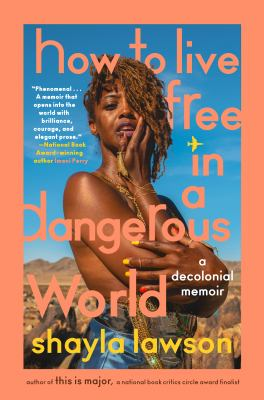
    How to live free in a dangerous world

    "Poet and journalist Shayla Lawson follows their National Book Critics Circle finalist This Is Major with these daring and exquisitely crafted essays, where Lawson journeys across the globe, finds beauty in tumultuous times, and powerfully disrupts the constraints of race, gender, and disability. With their signature prose, at turns bold, muscular, and luminous, Shayla Lawson travels the world to explore deeper meanings held within love, time, and the self. Through encounters with a gorgeous gondolier in Venice, an ex-husband in the Netherlands, and a lost love on New Year's Eve in Mexico City, Lawson's travels bring unexpected wisdom about life in and out of love. They learn the strength of friendships and the dangers of beauty during a narrow escape in Egypt. They examine Blackness in post-dictatorship Zimbabwe, then take us on a secretive tour of Black freedom movements in Portugal. Through a deeply insightful journey, Lawson leads readers from a castle in France to a hula hoop competition in Jamaica to a traditional theater in Tokyo to a Prince concert in Minnesota and, finally, to finding liberation on a beach in Bermuda, exploring each location--and their deepest emotions--to the fullest. In the end, they discover how the trials of marriage, grief, and missed connections can lead to self-transformation and unimagined new freedoms"-- Provided by publisher.
  • Image for We rip the world apart

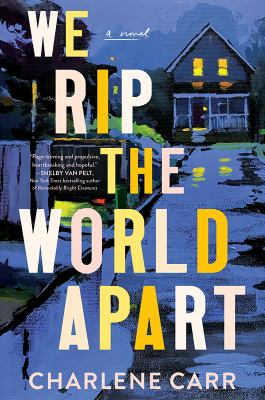
    We rip the world apart

    "From the acclaimed author of Hold My Girl comes a sweeping multi-generational story about motherhood, race, and secrets. When 24-year-old Kareela discovers she's pregnant with a child she isn't sure she wants, her struggle to understand her place in the world as a person who is half-Black, half-white--yet feels neither--is amplified. Her mother, Evelyn, fled to Canada with her husband and their first-born child during the politically charged Jamaican exodus in the 1980s, only to realize they'd come to a place where Black men are viewed with suspicion--a constant and pernicious reality Evelyn watches her husband and son navigate daily. Years later, in the aftermath of her son's murder by the police, Evelyn's mother-in-law, Violet, moves in, offering young Kareela a link to the Jamaican heritage she had never fully known. Despite Violet's efforts to help them through their grief, the traumas they carry grow into a web of secrets that threatens the very family they all hold so dear. In the present day, Kareela, prompted by fear and uncertainty about the new life she carries, must come to terms with the mysteries surrounding her family's past and the need to make sense of both her identity and her future. Weaving the women's stories across multiple timelines, We Rip the World Apart reveals the ways that simple choices, made in the heat of the moment and with the best of intentions, can have deep and lasting repercussions-especially when people remain stay silent"-- Provided by publisher.
  • Image for The Queen's spade

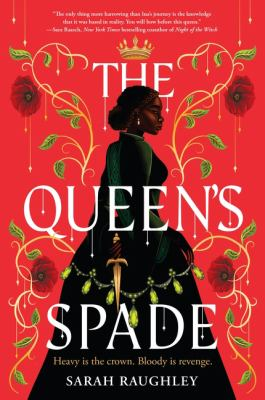
    The Queen's spade

    "The year is 1862 and murderous desires are simmering in England. Nineteen-year-old Sarah Bonetta Forbes (Sally), once a princess of the Egbado Clan, desires one thing above all else: revenge against the British Crown and its system of colonial 'humanitarianism,' which stole her dignity and transformed her into royal property. From military men to political leaders, she's vowed to ruin all who've had a hand in her afflictions. The top of her list? Her godmother, Britain's mighty monarch, Queen Victoria herself. Taking down the Crown means entering into a twisted game of court politics and manipulating the Queen's inner circle--even if that means aligning with a dangerous yet alluring crime lord in London's underworld and exploiting the affections of Queen Victoria's own son, Prince Albert, as a means to an end. But when Queen Victoria begins to suspect Sally's true intentions, she plays the only card in Victorian society that could possibly cage Sally once again: marriage. Because if there's one thing Sally desires more than revenge, it's her freedom. With time running out and her wedding day looming, Sally's vengeful game of cat and mouse turns deadly as she's faced with the striking revelation that the price for vengeance isn't just paid in blood. It means sacrificing your heart. Inspired by the true story of Sarah Forbes Bonetta, Queen Victoria's African goddaughter"-- Provided by publisher.
  • Image for The life of Herod the Great

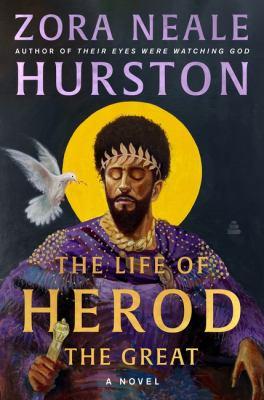
    The life of Herod the Great

    In the 1950s, as a continuation of Moses, Man of the Mountain, Zora Neale Hurston penned a historical novel about one of the most infamous figures in the Bible, Herod the Great. In Hurston's retelling, Herod is not the wicked ruler of the New Testament who is charged with the "slaughter of the innocents," but a forerunner of Christ--a beloved king who enriched Jewish culture and brought prosperity and peace to Judea. Portraying Herod within this vivid and dynamic world of antiquity, little known to modern readers, Hurston's unfinished manuscript brings this complex, compelling, and misunderstood leader fully into focus.--Back cover

  • Image for The last one

    The last one

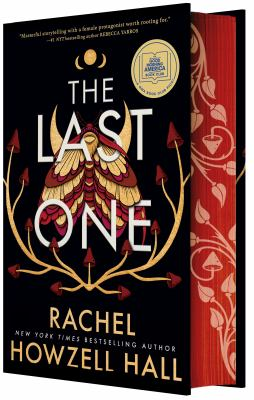
    "Thrown into a desolate land of sickness and unnatural beasts, Kai wakes in the woods with no idea who she is or how she got there. All she knows is that if she cannot reach the Sea of Devour, even this hellscape will get worse. But when she sees the village blacksmith fight invaders with unspeakable skill, she decides to accept his offer of help"-- Provided by publisher of large-print edition.

  • Image for Tell her story

    Tell her story

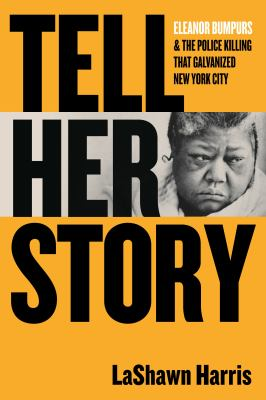
    "This deeply researched, intimate portrait of Eleanor Bumpurs's life and legacy highlights how one Black grandmother's brutal police murder galvanized an entire city. It also shows how possible and critical it is to stand together against racist policing now.""-- Provided by publisher.
  • Image for Immortal dark

    Immortal dark

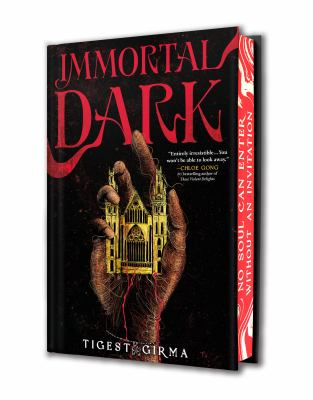
    "Orphaned heiress Kidan Adane grew up far from the arcane society she was born into, where human bloodlines gain power through vampire companionship. When her sister, June, disappears, Kidan is convinced a vampire stole her-the very vampire bound to their family, the cruel yet captivating Susenyos Sagad. To find June, Kidan must infiltrate the elite Uxlay University-where students study to ensure peaceful coexistence between humans and vampires and inherit their family legacies. Kidan must survive living with Susenyos-even as he does everything he can to drive her away. It doesn't matter that Susenyos's wickedness speaks to Kidan's own violent nature and tempts her to surrender to a life of darkness. She must find her sister and kill Susenyos at all costs. When a murder mirroring June's disappearance shakes Uxlay, Kidan sinks further into the ruthless underworld of vampires, risking her very soul. There she discovers a centuries-old threat-and June could be at the center of it. To save her sister, Kidan must bring Uxlay to its knees and either break free from the horrors of her own actions or embrace the dark entanglements of love-and the blood it requires.

  • Image for This cursed house

    This cursed house

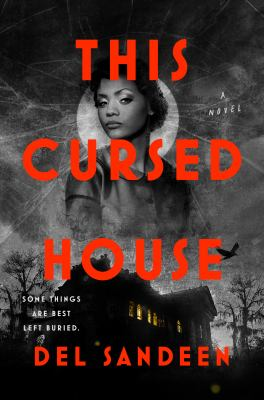
    "In this Southern gothic horror debut, a young Black woman abandons her life in 1960s Chicago for a position with a mysterious family in New Orleans, only to discover the dark truth: They're under a curse, and they think she can break it. In the fall of 1962, twenty-seven-year-old Jemma Barker is desperate to escape her life in Chicago-and the spirits she has always been able to see. When she receives an unexpected job offer from the Duchon family in New Orleans, she accepts, thinking it is her chance to start over. But Jemma discovers that the Duchon family isn't what it seems. Light enough to pass as white, the Black family members look down on brown-skinned Jemma. Their tenuous hold on reality extends to all the members of their eccentric clan, from haughty grandmother Honorine to beautiful yet inscrutable cousin Fosette. And soon the shocking truth comes out: The Duchons are under a curse. And they think Jemma has the power to break it. As Jemma wrestles with the gift she's run from all her life, she unravels deeper and more disturbing secrets about the mysterious Duchons. Secrets that stretch back over a century. Secrets that bind her to their fate if she fails"-- Provided by publisher.
  • Image for The second emancipation

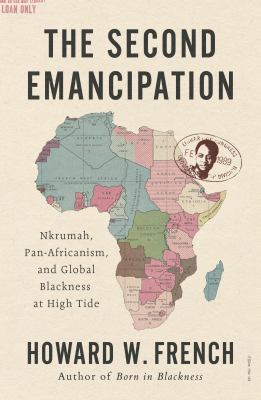
    The second emancipation

    Named one of the Most Anticipated Books of 2025 by Foreign Policy "Howard French's The Second Emancipation stands the second half of the last century on its geopolitical head." --David Levering Lewis, winner of the Pulitzer Prize From the acclaimed author of Born in Blackness comes an extraordinary account of Africa's liberation from colonial oppression, a work that fundamentally reshapes our understanding of modern history. A work of epic dimension that recasts the liberation of twentieth-century Africa through the lens of revolutionary leader Kwame Nkrumah.

  • Image for Sinners

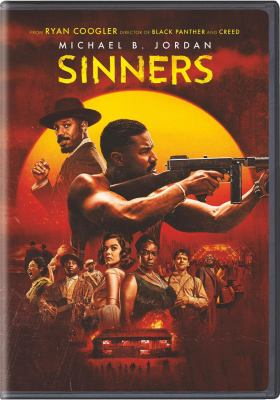
    Sinners

    Trying to leave their troubled lives behind, twin brothers return to their hometown to start again, only to discover that an even greater evil is waiting to welcome them back.

  • Image for I can't even think straight

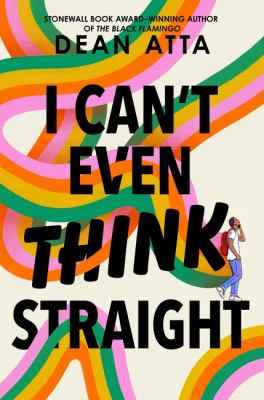
    I can't even think straight

    "Kai knows who he is to others: the good grandson, the reliable best friend, the romantic back-up. But he doesn't quite know who he is to himself. Kai wants to come out at school, but his best friend there, Matt, stays closeted for fear of getting kicked out by his conservative parents--and wants Kai to do the same. Kai unhappily agrees, but when a rumor goes around that Kai and Matt are dating, Matt starts acting differently anyway. Kai's other best friend Vass is proudly nonbinary and thinks Matt is a negative influence--though maybe that's just their crush on Kai talking. Kai has always turned to writing to express his emotions, but when his on-page emotions erupt into the real world, he might just be putting the delicate balance of his life at risk"-- Provided by publisher.
  • Image for The bookshop sisterhood

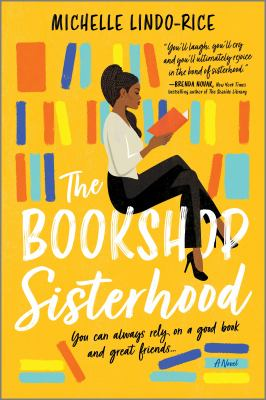
    The bookshop sisterhood

    While working toward the grand opening of their Black-owned bookstore, four best friends are each told four little words that upend their lives, forcing them to lean on each other--and the books they love--to navigate the changes or risking losing the business and their friendships.

  • Image for The trouble of color

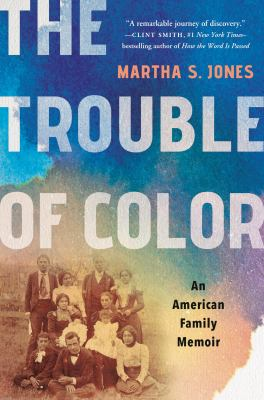
    The trouble of color

    "A child of the civil rights era, Martha S. Jones grew up feeling her Black identity was obvious to all who saw her. But in Jones's first semester of college, a Black Studies classmate challenged her right to speak. Suspicious of the color of her skin and the texture of her hair, he confronted her with a question that inspired a lifetime of introspection: "Who do you think you are?" Now a prizewinning scholar of Black history, Jones delves into her own family's past for answers, only to find a story that archives alone can't tell, a story of race in America that takes us beyond slavery, Jim Crow, and civil rights. Ever since her great-great-great-grandmother Nancy emerged from bondage in 1865 determined to raise a free family, skin color has determined Jones's ancestors' lives. But color and race are not the same, and through her family's story, Jones discovers the uneven, unpredictable relationship between the two. Drawing readers along the shifting and jagged path of America's color line, The Trouble of Color is a lyrical, deeply felt meditation on the most fundamental matters of identity, belonging, and family"-- Provided by publisher.
  • Image for The 1619 Project

    The 1619 Project

    "The animating idea of The 1619 Project is that our national narrative is more accurately told if we begin not on July 4, 1776, but in late August of 1619, when a ship arrived in Jamestown bearing a cargo of twenty to thirty enslaved people from Africa. Their arrival inaugurated a barbaric and unprecedented system of chattel slavery that would last for the next 250 years. This is sometimes referred to as the country's original sin, but it is more than that: It is the country's very origin. The 1619 Project tells this new origin story, placing the consequences of slavery and the contributions of Black Americans at the center of the story we tell ourselves about who we are as a country. Orchestrated by the editors of The New York Times Magazine, led by MacArthur "genius" and Pulitzer Prize-winning journalist Nikole Hannah-Jones, this collection of essays and historical vignettes includes some of the most outstanding journalists, thinkers, and scholars of American history and culture--including Linda Villarosa, Jamelle Bouie, Jeneen Interlandi, Matthew Desmond, Wesley Morris, and Bryan Stevenson. Together, their work shows how the tendrils of 1619--of slavery and resistance to slavery--reach into every part of our contemporary culture, from voting, housing and healthcare, to the way we sing and dance, the way we tell stories, and the way we worship. Interstitial works of flash fiction and poetry bring the history to life through the imaginative interpretations of some of our greatest writers. The 1619 Project ultimately sends a very strong message: We must have a clear vision of this history if we are to understand our present dilemmas. Only by reckoning with this difficult history and trying as hard as we can to understand its powerful influence on our present, can we prepare ourselves for a more just future"-- Provided by publisher.
  • Image for Womb city

    Womb city

    This genre-bending Africanfuturist horror novel blends The Handmaid's Tale with Get Out in an adrenaline-packed, cyberpunk body-hopping ghost story exploring motherhood, memory, and a woman's right to her own body. Nelah seems to have it all: fame, wealth, and a long-awaited daughter growing in a government lab. But, trapped in a loveless marriage to a policeman who uses a microchip to monitor her every move, Nelah's perfect life is precarious. After a drug-fueled evening culminates in an eerie car accident, Nelah commits a desperate crime and buries the body, daring to hope that she can keep one last secret. The truth claws its way into Nelah's life from the grave. As the ghost of her victim viciously hunts down the people Nelah holds dear, she is thrust into a race against the clock: in order to save any of her remaining loved ones, Nelah must unravel the political conspiracy her victim was on the verge of exposing--or risk losing everyone. Set in a cruel futuristic surveillance state where bodies are a government-issued resource, this harrowing story is a twisty, nail-biting commentary on power, monstrosity, and bodily autonomy. In sickeningly evocative prose, Womb City interrogates how patriarchy pits women against each other as unwitting collaborators in their own oppression. In this devastatingly timely debut novel, acclaimed short fiction writer Tlotlo Tsamaase brings a searing intelligence and Botswana's cultural sensibility to the question: just how far must a woman go to bring the whole system crashing down?

View All